N
October 19 — 22, 2026 · The Opening Leg

The Sea Gates

where the expedition begins, and the water is the road

Pilgrims  ·  Corsairs · Oysters  ·  Invasions

Four days on the rim of the bay with the highest tide in Europe. Two women open a fourteen-day expedition in Brittany — the corsair city that faces outward, the mount pilgrims drowned trying to reach, oysters eaten standing in the wind, and seventy metres of embroidered conquest that is, this particular autumn, on the wrong side of the sea.

The Journey Step Into the Portal

Where the scouts land first

Every Pas Perdu journey begins with someone going first, on purpose. This is the opening of that trip — four working days through Brittany before the road bends north to London, the Highlands, and the fires of Samhain in Edinburgh. It is reconnaissance: walking the ground of journeys to come, with the history read before we arrive.

And it turns out the leg has a spine nobody planned. Every place on it is about crossing water — the pilgrims who died on the sands, the corsairs who sailed under licence, the tide that farms the oysters twice a day, and two invasions that took the same channel in opposite directions, eight hundred and seventy-eight years apart. The Channel is not the gap between these places. It is what they have in common.

4
Days, airport to Eurostar
~15m
The bay's tidal range
878
Years between the invasions

Four acts on the water's edge

Not a checklist of sights — four places that each teach you one thing you couldn't have seen alone, and then change what you notice everywhere after.
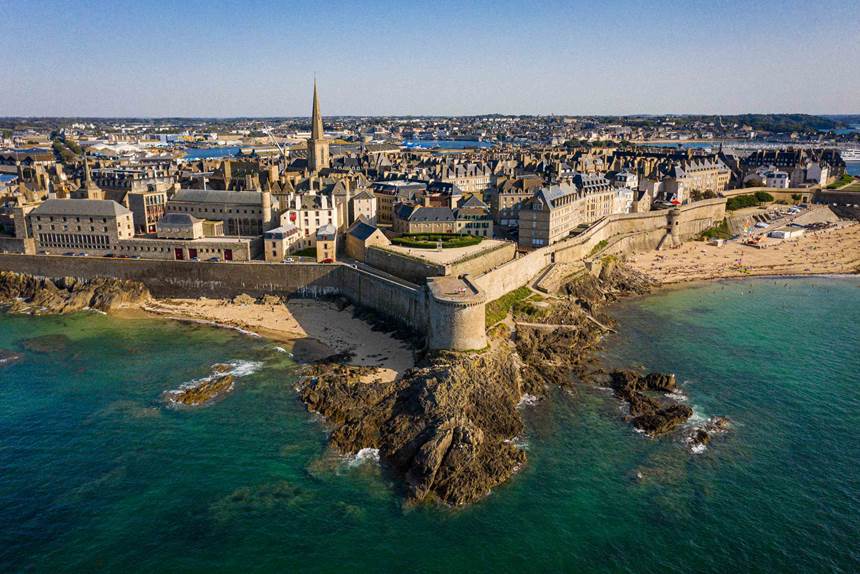
Saint-Malo from the air — the walled granite city on its rock
Act I · Saint-Malo

The City That Faces Outward

Not pirates — corsairs, and the difference is a piece of paper: a royal licence that made the war legal and the prizes judged in court. Then look again at the granite. Roughly eighty percent of the city inside these walls was destroyed in 1944, and rebuilt over twelve years from old plans and salvaged stone. Almost everything below the wall-line is younger than it looks — which makes it rarer, not lesser. A promise kept.
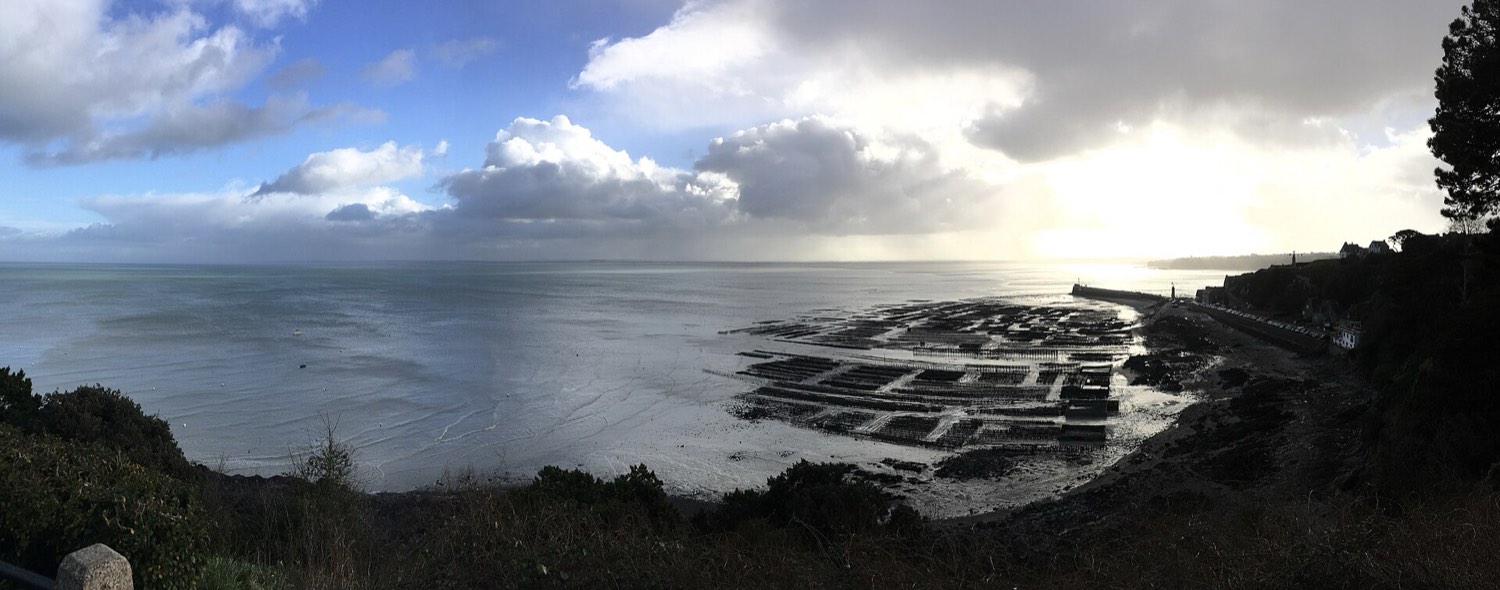
Cancale's oyster beds uncovered at low water
Act II · Cancale

Where the Tide Is the Terroir

Wine has soil; this bay has the greatest tidal range in Europe, stripping and flooding hundreds of square kilometres of seabed twice a day. An oyster drinks its bay, so the tide is literally the taste. And here the oyster has never been a luxury — it's breakfast, bought by the tray for a few euros, eaten with your fingers at the seawall, shells thrown over the shoulder onto a drift decades deep. That mindset is the tasting note.
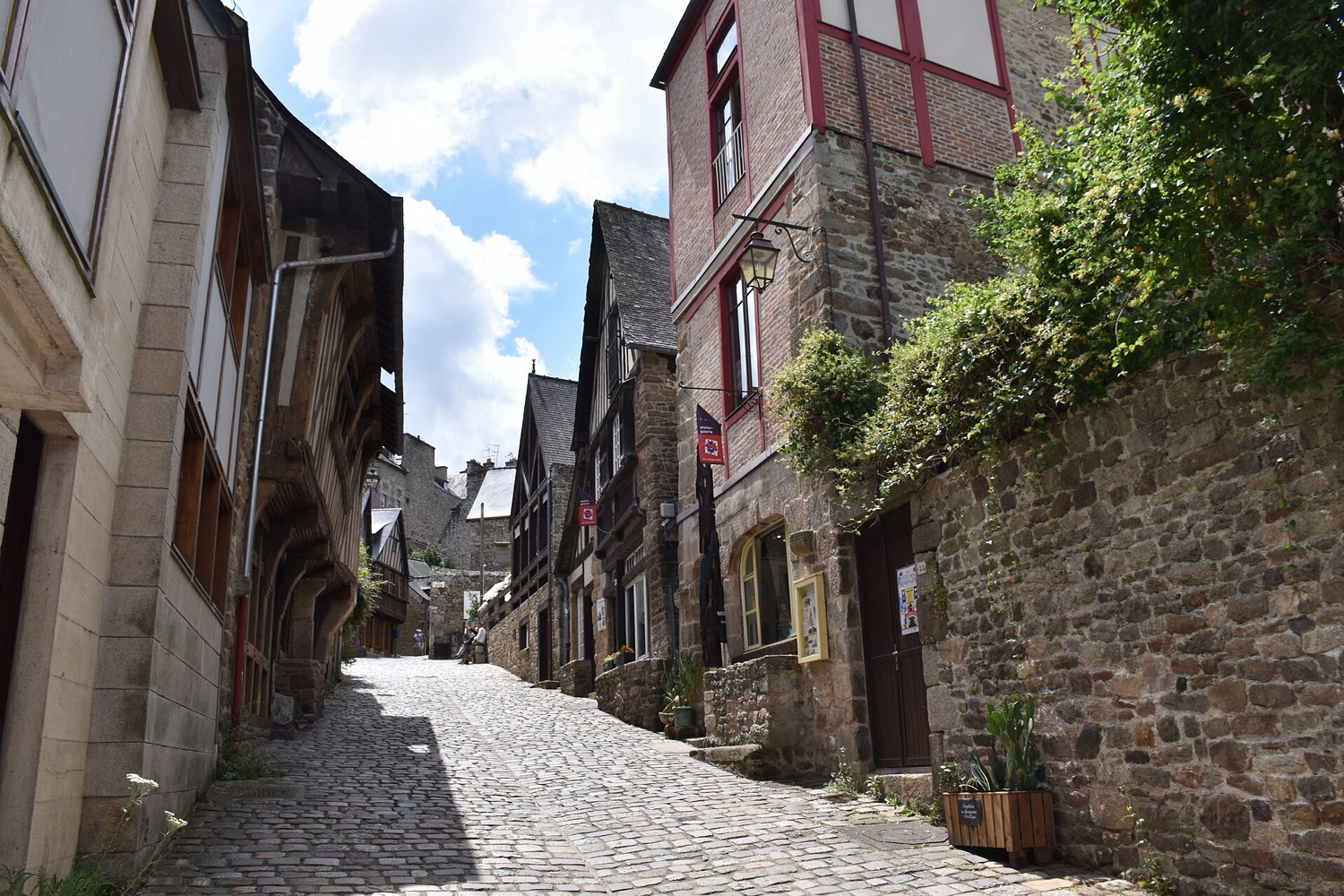
The Rue du Jerzual dropping from Dinan's walled town to the riverport
Act III · Dinan

The Living Middle Ages

Dinan kept what war and fashion took from the rest of Brittany: three kilometres of ramparts, merchants’ houses leaning on their oak posts, and the Rue du Jerzual dropping steeply from walled town to riverport — the loveliest street in the duchy, and the hardest on the knees. In the church of Saint-Sauveur rests the heart of Bertrand du Guesclin, the Breton knight who fought England to a standstill; France claimed the rest of him, piece by piece, along the road to the royal crypt. The heart stayed home.
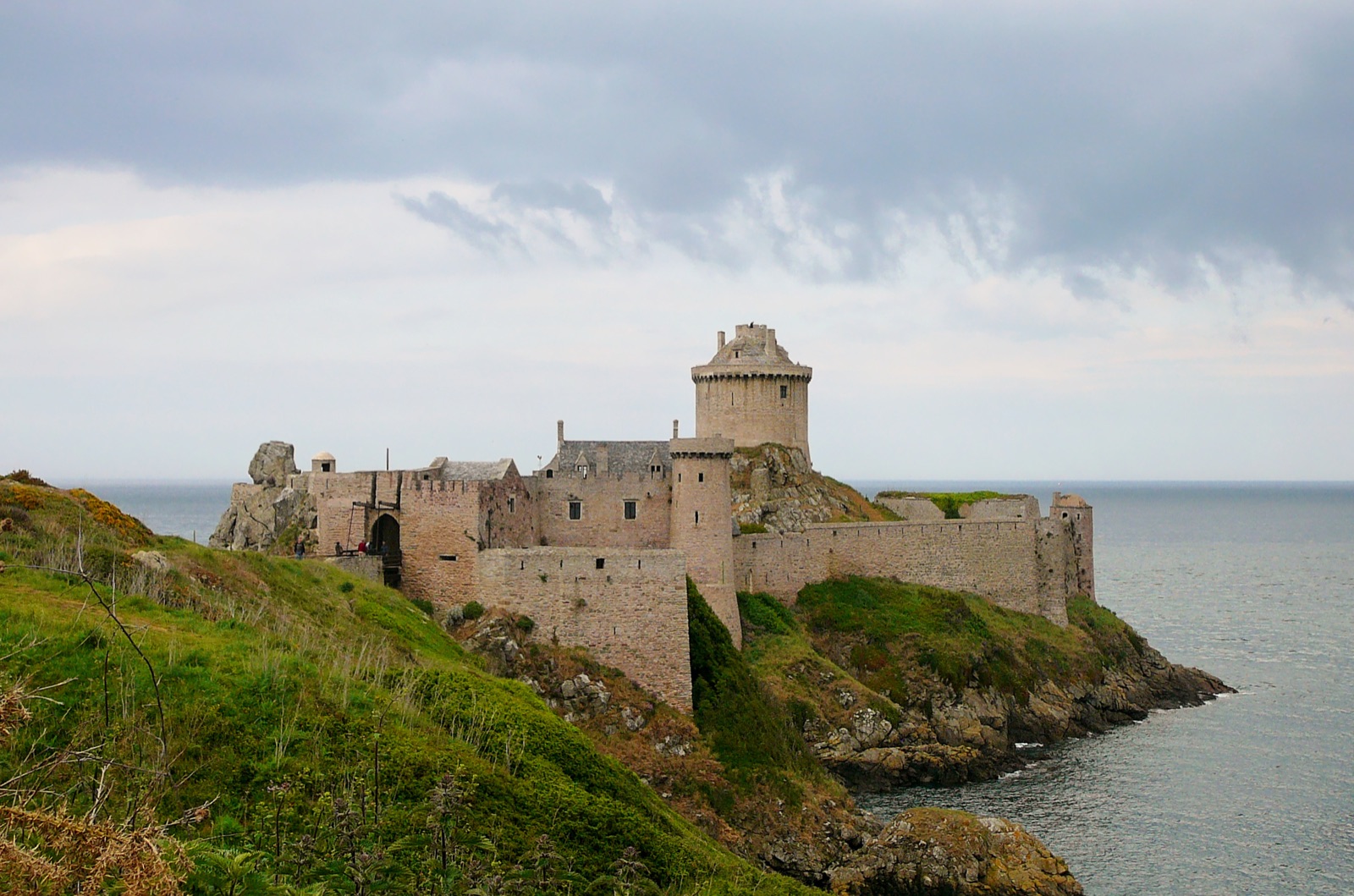
Fort La Latte on its sea-cliff, Emerald Coast
Act IV · The Fork

Chateaubriand, or the Emerald Coast

The last afternoon forks, and both tines belong to the sea. One way is Chateaubriand’s: Combourg, the castle of his haunted boyhood, then the Grand Bé off Saint-Malo at low tide — the island grave he chose so the ocean would visit him forever; mind the tables, the causeway drowns twice a day. The other is the Emerald Coast at full drama: Fort La Latte, a fortress grown out of a sea-cliff since the twelve hundreds, and the lighthouse heath at Cap Fréhel. Either way, home along the Rance through Saint-Suliac — one of the loveliest villages in France.

The Menhir de Champ-Dolent

Everything else here crossed water.This didn't.

Nine and a half metres of granite standing in a farm field, over a hundred tonnes of it, dragged four kilometres overland by people who left no name, no language, and no reason — roughly five thousand years ago, before writing reached Europe. No ticket, no queue, no interpretation centre. Walk the full circle, then face south toward Bonnemain and hold those four kilometres in your mind. That direction, not the stone, is where the awe actually lives.

The four days

Deliberately unhurried. The memorable part of a journey is usually the hour between two destinations — the itinerary leaves room for it.

Three ribbons, if the days allow

Dinan

The Rue du Jerzual

A cobbled street that falls from the walled town to the river, still lined with the workshops that made it. Bertrand du Guesclin's body was divided at death and travelled in pieces; his heart came here. Walk it downhill, then turn and climb — the climb is the medieval commute.

Combourg & the Grand Bé

The Chateaubriand ribbon

Two points, one man, one lesson in how a life gets bracketed. The childhood tower where he lay awake afraid, and the bare granite slab on a tidal island where he asked to be buried facing the sea. Check the tide table — the water returns fast enough to strand you for six hours.

The Rance Valley

Cidre → pommeau → lambig

One orchard, three states of the same apple: the cider, the fortified blend, the distilled spirit. Taste them in that order in a single cellar and you've tasted the whole logic of a Breton farm — nothing wasted, everything escalated.

Two travelers, to begin

Desta

The Scout

Founder of Pas Perdu, traveling the way the company thinks: history first, notebook always open, every find feeding the journeys to come. The leg exists to be walked before it is offered.

Marianne

Half-Muse, Half-Maker

The travel-buddy of France, Portugal, and now Britain — the one who makes the days easier and the conversations more interesting. She is here from the first landing, and stays sea to fire.

The water crossed both ways

In 1066 the Normans crossed north and took England, and had the conquest embroidered — probably by English hands — into seventy metres of linen kept at Bayeux. In 1944 the crossing ran the other way: the Allies came south onto this same coast, and because they could not seize a port they towed one across behind them and sank it in an arc off Arromanches. Two invasions, opposite directions, eight hundred and seventy-eight years apart, on one stretch of water you can see from both shores.

Then there is the coincidence that makes this leg's calendar quietly extraordinary. The Bayeux Tapestry left its museum for a rebuild and went to the British Museum on the tenth of September 2026 — its first return to England, where it was very likely made, in over nine hundred years. On the twenty-second of October we cross the Channel ourselves and meet it on the other side. Six weeks behind the Tapestry, on the same route, in the same direction the conquest went. Nobody planned that. The calendar simply handed it over.

Pilgrims
A thousand years of walkers crossed open sand to reach the Mont — barefoot, over quicksand, under fog. Its medieval name says it plainly: Saint-Michel at the peril of the sea. The crossing was the pilgrimage.
Corsairs
Saint-Malo's war came with paperwork — and its counting-houses kept other ledgers too, financing slaving voyages banked in the same granite mansions. A witness owes you both.
Oysters
The oyster the kings sent riders for was the flat native; disease collapsed it in the 1970s. Today's is a Pacific species raised on a Breton tide — a survivor's arrangement. Ask for plates and taste the two against each other.
The Warrior’s Heart
Bertrand du Guesclin, Brittany’s greatest knight, died on campaign in 1380 — and France buried him in pieces along the road home: entrails, flesh, skeleton, each claimed by a city. Only the heart reached Dinan. It rests in Saint-Sauveur, a few streets from his statue in the square where he fought a single combat at twenty.

By invitation only

The Sea Gates is the opening leg of a founders' expedition — the reconnaissance behind the journeys Pas Perdu will offer next. If you're traveling with us, your door is already open: watch your email for a letter from Sebastian. And if the bay calls to you for another year — the scouts go first, so that you can follow.

Discover Pas Perdu